

For Immediate Release
September 2026
Hansen & Harmon Injury Law Warns That Automatic Emergency Braking Systems Routinely Fail to Detect Motorcycles, Creating a Hidden Danger on Las Vegas Roads
LAS VEGAS, NV — As automakers race to equip new vehicles with increasingly sophisticated safety features — automatic emergency braking, lane-departure warnings, blind-spot monitoring — Nevada motorcyclists may be facing a danger hiding inside that technology. A growing body of research confirms that these systems frequently fail to detect motorcycles, a flaw that legal experts say is quietly reshaping the liability landscape for rider-injury claims across the Las Vegas valley.
The Insurance Institute for Highway Safety (IIHS) recently overhauled its front crash prevention testing protocol, raising evaluation speeds to 31, 37, and 43 mph and adding motorcycle-shaped targets for the first time. The results were stark: of all vehicles tested, only one — the 2023–24 Subaru Forester — earned a “good” rating when a motorcycle was the object in the vehicle’s path. The rest failed or scored poorly. Meanwhile, the same AEB technology prevents roughly half of all standard rear-end collisions, meaning drivers are receiving a false sense of protection that does not extend to the riders sharing the road with them.
The timing is critical. While overall U.S. traffic fatalities recently fell below 1.0 deaths per 100 million vehicle miles traveled — a decades-long milestone — motorcycle fatalities moved in the opposite direction. Motorcyclists now account for 16 percent of all traffic deaths nationally, and riding remains 28 times deadlier per mile than driving a car. In the Las Vegas valley, that gap has real consequences: the high-speed merge corridors along the 95 and 215, heavy tourism traffic, and the region’s year-round riding season create conditions where AEB detection failures translate directly into catastrophic crashes.
“A driver whose car is equipped with automatic emergency braking may genuinely believe they are protected against rear-ending a motorcycle. The research tells a different story. That technology was tested against cars, not riders. When you put a motorcycle in that detection window, most of these systems do not respond — and the rider absorbs the full impact with no protection at all.”
— Kevin R. Hansen, Managing Partner, Hansen & Harmon Injury Law
Hansen, a graduate of the University of San Diego School of Law with more than thirty years of personal injury trial experience in Nevada, says the AEB detection gap is surfacing in the firm’s active motorcycle caseload. Left-turn collisions at intersections in Aliante and Centennial Hills, rear-end crashes on the 95 and 215, and lane-change incidents involving distracted drivers are all case types where AEB was theoretically active but did not prevent the crash. In those files, the technology record — what the vehicle’s onboard systems logged in the seconds before impact — is becoming a critical piece of evidence.
The liability question is not yet settled in Nevada courts, but it is developing quickly. When a vehicle equipped with AEB fails to brake for a motorcycle and the rider is killed or severely injured, the defense posture has typically centered on driver inattention. That framing may be insufficient where the vehicle manufacturer represented the system as capable of preventing exactly this type of crash. Hansen & Harmon Injury Law is among the practices in the state tracking the intersection of product liability and rider-injury claims as the IIHS research enters the litigation mainstream.
For riders, the firm emphasizes that the detection gap means defensive riding cannot be outsourced to the vehicles around them. Positioning within a lane, managing following distances, choosing visibility over speed at intersections, and understanding that a driver’s new car may be doing less than the driver believes — these are the practical adjustments that translate into crash avoidance in a market where AEB-equipped vehicles are the majority of new registrations. For those who are injured, the advice is direct: preserve the other vehicle’s black box data and request the AEB event log early, because that record can be overwritten.
Hansen & Harmon Injury Law handles motorcycle accid
ent claims throughout North Las Vegas, the greater Las Vegas valley, and surrounding Nevada communities. The practice provides free initial consultations in English and Spanish and works on a contingency basis, meaning no fees are charged unless the case is resolved in the client’s favor. The firm’s attorneys are admitted to the State Bar of Nevada and bring direct attorney-led case handling from intake through resolution.
About Hansen & Harmon Injury Law
Hansen & Harmon Injury Law is a personal injury practice serving injured Nevadans from its Las Vegas office. With more than thirty years of combined trial experience, the firm handles motorcycle accidents, car collisions, truck accidents, slip and fall claims, and uninsured/underinsured motorist disputes throughout the Las Vegas valley and North Las Vegas. Bilingual services are available in English and Spanish. All cases are handled on a contingency fee basis.
Share:
More Posts

Las Vegas E-Bike Injuries Have More Than Doubled in 2026 — and Nevada’s Legal Framework Has Not Kept Up
FOR IMMEDIATE RELEASESeptember 2026 Las Vegas E-Bike Injuries Have More Than Doubled in 2026 — and Nevada’s Legal Framework Has Not Kept Up Hansen &
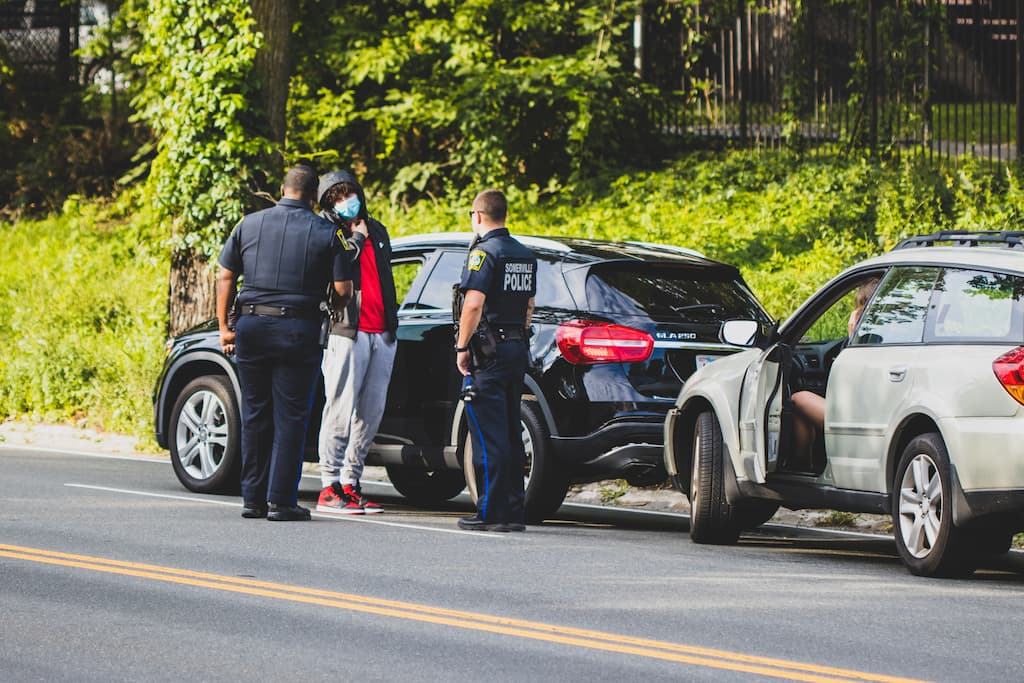
What Not to Say After a Car Accident: The Two Words That Can Cost You Thousands
“I’m Fine” — The Two Words That Can Cost You Thousands Get Legal Advice Now If you’re wondering what not to say after a car
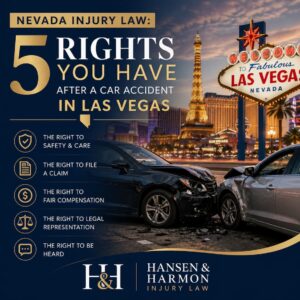
Nevada Law: 5 Rights You Have After A Car Accident in Las Vegas
Most Las Vegas accident victims don’t realize how many protections Nevada law gives them — until it’s too late to use them. Insurance companies move
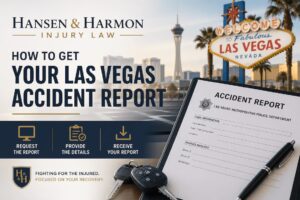
How to Get a Las Vegas Police Report For Your Accident
Experiencing a car accident in Las Vegas can be disorienting and stressful. Figuring out how to get a Las Vegas police report for your accident